M
T
A life spent
refusing to be fragmented
He grew up inside music. His father was a musician, his mother sang, his brothers played instruments — and inside the house there was creative freedom of a kind that Glasgow's streets did not offer. To sing, to dance, to paint, to tell stories, to feel and express feeling openly — all of this was simply what life was, indoors. Outside was another matter. Glasgow kept its emotions tightly controlled, loosening only with drink, carrying beneath its surface a readiness for violence. He never felt at home in that social world. The one place he felt genuinely safe — free to explore, to feel, to be fully present — was on stage. The stage was the inside of the house, brought into the world.
When his father pressed him at thirteen to take up a specific instrument, he refused. What he said — and what he has in some form never stopped saying — was: I want to learn to play myself.
That refusal shaped everything that followed.
At seventeen he entered acting school in Glasgow — the youngest student they had taken, arriving directly from a lead role in a BBC film. He came already formed. A completely physical sense of self, rooted in the body since childhood, though he had no language for it yet. What the school was offering — an academic, fragmented approach rooted in old English theatrical traditions — had no purchase on what he already was. The teachers recognised his talent immediately and consistently. What none of them could tell him was what to do with it. By the end of his first year he was dying a slow death in that dualistic environment.
Then, at a birthday party in Edinburgh, he was introduced to Lindsay Kemp. It was, in the most precise sense, love at first sight — and Kemp knew it immediately. Every hour of free time from that point was spent in Edinburgh: taking class with Kemp, working backstage, living inside the extraordinary bohemian world he inhabited. Two years that took him as far from acting school as it was possible to travel.
What Kemp offered was not technique. It was the opposite of technique. It was the living moment — dangerous, emotionally spontaneous, unrepeatable. Oriental theatre. The embodied artist. Improvisation not as method but as the only honest response to what is actually happening now. Living emotions arising in the hearing and the now, not manufactured in advance and managed from a distance. This was the first clear encounter with what would take another twenty-five years to fully understand — but the recognition was immediate and total. The ground had been found. Everything that followed was, in one sense, a return to it.
The Citizens Theatre in Glasgow had been transformed in 1969 when Giles Havergal, Philip Prowse and Robert David MacDonald took it over with an entirely new idea: to employ young actors fresh from training, chosen not for technique but for passion. No passion, no living it — no entry. The company became almost immediately one of the most distinctive theatres in the world.
Because of his work with Kemp — and because the company knew and admired what Kemp represented — he eventually gained a foothold. It was everything he had been looking for. The freedom to be the artist he felt himself to be. A company built on the same ground Kemp had shown him: that living presence, not managed performance, was the only thing worth pursuing.
Others passed through who would go on to become famous elsewhere — Pierce Brosnan, Gary Oldman, Tim Roth among them. He stayed. Not because other paths were closed, but because he knew he was on the track of something essential — the nature of his own talent, still not fully understood, still unfolding. Twenty-five years of that unfolding. The stage as the place where the question could be asked honestly, night after night, in front of other human beings.
"I wanted to live my life through the roles I played — not manage them from a distance."Throughout those years — the repertory work, a year at the National Theatre with Ian McKellen, the travels to India, the Himalayas, Morocco, South India where he spent six months as a student of Kathakali — something was clarifying. On stage, increasingly and unmistakably, he was encountering a state of nonduality. Not as philosophy. As direct experience. The fragmented self, the constructed performer, the managed technique — all of it occasionally and then more frequently falling away, leaving something simpler and more alive in its place.
It would be some time before he found the courage to make a stand for it. To name awareness and consciousness as the actual subject of the work, not its byproduct. But when that moment came, it brought with it a clarity that made the dualistic world of technique and tradition impossible to continue inhabiting. There was no point. He had arrived somewhere. The old world had nothing left to offer the question he was now fully committed to asking.
Egypt had been visited before. Several times. But now it became something else — a place where an extended stay was possible, where life could be lived differently. One year became twenty-two. He was drawn by the culture, by the extraordinary warmth and immediacy of its people, by the ancient living traditions of epic storytelling he encountered in Upper Egypt — bards improvising oral narratives in a tradition as old as Homer, as alive as the street outside. Cairo became his base. Spontaneous. Living. Uncontrolled.
He had left the theatre to find another kind of theatre.
In Cairo, the practice left the stage and entered life itself — deepened through workshops with actors, dancers, singers, and storytellers, and through the living culture of a city that became a second home. He was present through two revolutions — 2011, and the coup that followed — and came to know Egypt's streets and its people as home in a way that Glasgow's streets had never managed to be.
Berlin came with Brexit and Covid arriving together. He applied for residency and stayed. He continues to return to Egypt — spending time among friends, in the Fayoum oasis, in the living culture that first drew him there. And in Berlin, the practice continues — quieter now, more interior, but no less alive. Still new. Still not knowing, quite, what it is. And finding in that not-knowing the most honest place to stand.
The journey did not lead
to a destination
He is seventy-three. The journey did not lead to a destination. It led to more journey.
After surviving a rupture that might easily have ended everything, the practice continues — not despite what happened, but somehow clarified by it. The body, humbled and slowly recovering, remains the ground. The inquiry remains open. The state that first revealed itself on stage in Glasgow, that deepened through Cairo's streets, that has been the subject of a lifetime's attention — is still not fully known. Still arriving. Still new.
This is not a completed work being presented. It is a living practice, documented by someone still inside it.
Begin a
conversation
If something in this work speaks to you — whether you are drawn to the work, wish to understand the practice more, or simply feel the pull of the question — you are welcome to make contact.
[email protected]+49 (0)151 4032 1820 (WhatsApp)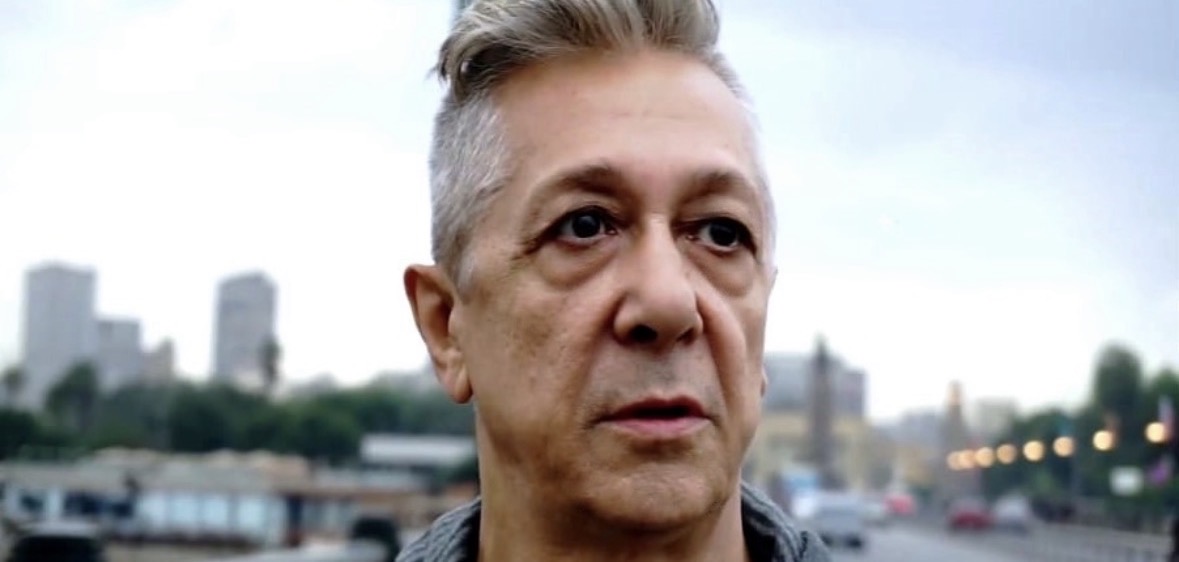
Laurance Rudic — Cairo